
March is Women’s Month
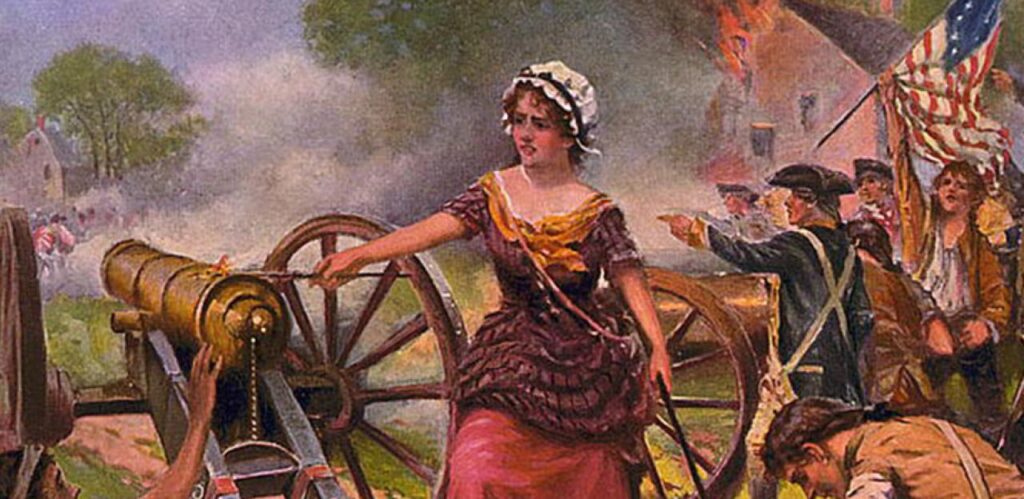
This month, during Women’s History Month, we are featuring an interesting article by the American Battlefield Trust, which conveys the hardships and determination of the women who lived in our war-torn country in the 1800’s. Many women fought for our country, supported their families and the patriots, often caring for their homesteads until their husband’s return. Their sacrifices were many and their hardships helped paved the way for our freed.
The most well known were the men who helped promote the idea of freedom, George Washington, Patrick Henry, Paul Revere and the Marquis de Lafayette to name a few. Women were also interested in rights and freedom.
- Mercy Otis Warren, an excellent writer, wrote plays that made fun of the British. Printed in pamphlets, her plays were very popular. Later she wrote three books that described the events of the American Revolution.
- Phillis Wheatley was an African girl brought to the colonies a a slave. Bought by the Wheatley family, she learned to read and write and wrote poetry. Phillis wrote a poem for General Washington and visited him at army headquarters. She is known as the first published black woman poet in America.
- Deborah Sampson dressed in men’s clothing and joined the Continental Army in 1782 as Robert Shurtleff. She received an honorable discharge for her work as a soldier when her identity was
- Abigail Adams was the wife and closest advisor of John Adams, as well as the mother of John Quincy Adams. She is sometimes considered to have been a Founder of the United States, and is now designated as the second first lady of the United States, although this title was not used at the time. Adams’s life is one of the most documented of the First Ladies: she is remembered for the many letters she wrote to her husband while he stayed in Philadelphia, Pennsylvania, during the Continental Congresses. John frequently sought the advice of Abigail on many matters, and their letters are filled with intellectual discussions on government and politics. Her letters also serve as eyewitness accounts of the American Revolutionary War home front. Nps.gov Wikipedia She ran the family farm in Massachusetts while husband John was working in the Continental Congress in Philadelphia. She wrote letters to him, reminding him “not to forget the ladies” as Congress was writing laws for the new government. Adams brought more intellect and ability to the position of first lady of the United States than any other woman. President Harry Truman once noted that Abigail “would have been a better President than her husband.” Yet she lived in an era when women were not supposed to have, or express, their opinions about government or the exciting events of the times. Abigail Adams struggled her whole life with the limitations that society placed upon her dreams. Despite these hardships, she found a way to use her talents to serve her nation by assisting and advising her husband, President John Adams, and teaching and guiding her son, President John Quincy Adams. Throughout her seventy-four-year life, this American heroine was an invaluable contributor to the founding and strengthening of the United States. https://www.history.com/topics/first-ladies/abigail-adams
- Mercy Otis Warren (September 14, [September 25, New Style] 1728 – October 19, 1814) was a poet, playwright and pamphleteer during the American Revolution. During the years before the American Revolution, Warren published poems and plays that attacked royal authority in Massachusetts and urged colonists to resist British infringements on colonial rights and liberties. She was married to James Warren, who was likewise heavily active in the independence movement. https://www.revolutionary-war.net/mercy-otis-warren/
https://www.britannica.com/biography/Mercy-Otis-Warren - Deborah Sampson Gannett (December 17, 1760 – April 29, 1827), better known as Deborah Sampson, was a Massachusetts woman who disguised herself as a man in order to serve in the Continental Army during the American Revolutionary War. She is one of a number of women with a documented record of military combat experience in that war. She served 17 months in the army under the name “Robert Shirtliff” (also spelled in various sources as Shirtliffe and Shurtleff) of Uxbridge, Massachusetts. Sampson was wounded in 1782, and was honorably discharged at West Point, New York in 1783. Wikipedia Sampson became a hero of the American Revolution when she disguised herself as a man and joined the Patriot forces. She was the only woman to earn a full military pension for participation in the Revolutionary army.Born on December 17, 1760 in Plympton, Massachusetts near Plymouth, Sampson was one of seven children to Jonathan Sampson Jr. and Deborah (Bradford) Sampson. Both were descendants of preeminent Pilgrims: Jonathan of Myles Standish and Priscilla Alden; his wife, the great granddaughter of Massachusetts Governor William Bradford. Still, the Sampson’s struggled financially and, after Jonathan failed to return from a sea voyage, his impoverished wife was forced to place her children in different households. Five years later, at age 10, young Deborah was bound out as an indentured servant to Deacon Benjamin Thomas, a farmer in Middle-borough with a large family. At age 18, with her indenture completed, Sampson, who was self-educated, worked as a teacher during summer sessions in 1779 and 1780 and as a weaver in winter. In 1782, as the Revolutionary War raged on, the patriotic Sampson disguised herself as a man named Robert Shurtleff and joined the Fourth Massachusetts Regiment. At West Point, New York, she was assigned to Captain George Webb’s Company of Light Infantry. She was given the dangerous task of scouting neutral territory to assess British buildup of men and materiel in Manhattan, which General George Washington contemplated attacking. In June of 1782, Sampson and two sergeants led about 30 infantrymen on an expedition that ended with a confrontation—often one-on-one—with Tories. She led a raid on a Tory home that resulted in the capture of 15 men. At the siege of Yorktown she dug trenches, helped storm a British redoubt, and endured canon fire. For over two years, Sampson’s true sex had escaped detection despite close calls. When she received a gash in her forehead from a sword and was shot in her left thigh, she extracted the pistol ball herself. She was ultimately discovered—a year and a half into her service—in Philadelphia, when she became ill during an epidemic, was taken to a hospital, and lost consciousness. Receiving an honorable discharge on October 23, 1783, Sampson returned to Massachusetts. On April 7, 1785 she married Benjamin Gannet from Sharon, and they had three children, Earl, Mary, and Patience. The story of her life was written in 1797 by Herman Mann, entitled “The Female Review.” https://www.womenshistory.org/education-resources/biographies/deborah-sampson
- Mary Draper Ingles Mary Draper is famous for her efforts to assist the Continental Army by offering food, hospitality, clothing, and ammunition to the Patriots. Little is known of her life previous to the American Revolutionary War. She was born Mary Alvis on April 4, 1719. She was married, widowed, and remarried to a Moses Draper. Together they worked a large farm. They had six children, five sons and one daughter. Mary Draper was widowed again at 56 years old in 1775. During the Colonial period, the household items that women owned not only proved their ability as a wife and homemaker, but were a sign of wealth or were their dowry. As girls, they made or were handed down household items like china, silverware, quilts, sheets, and etc. to start their new life with when they got married. Mary Draper was literally melting down her money and giving it away.While she couldn’t leave her family and join the army (though her willingness to help leaves me little doubt she would have, if she could), she gave as much as she could. According to the records left by the Rev. William Clark, large companies of soldiers marched through their town almost daily, and Mary Draper set to work baking bread and making cheese and cider. She spread it all out on a table in front of her house that she kept stocked daily for the soldiers passing through. After the soldiers had all made their way to the battlefield, her work was hardly over. On hearing that the army was low on ammunition, she melted down her own pewter platters and mugs. As if that wasn’t enough, she also made shirts and coats for the Continental Army from her spare sheets and fabric woven in her own home. Her service was entirely given to her country. She died at age 92 in 1810.
Credit: Lived at the Time of the American Revolution
– Ronda McCauley