
Thomas Paine, a Renowned Pamphleteer
“The sun never shined on a cause of greater worth.” – Thomas Paine
Before what we refer to as “social media,” more than 250 years ago pamphleteers were the ones spreading information throughout the colonies. Mercy Otis Warren was writing satirical plays and poems attacking England in the 1770’s. The colonies were afire with discontent and protests even before the “Shot Heard ‘Round the World.”
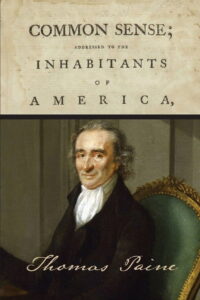
The most prominent of these pamphleteers was Thomas Paine. His most well known works were Common Sense, The American Crisis and Rights of Man.
Paine was sparsely educated in England. Fortunately, he was gifted with the ability to persuade. He met Benjamin Franklin in England. Franklin recommended he go to the New World and begin a life as an editor and publisher in Philadelphia. Paine did just that in 1774. He soon published as an influential voice, most often anonymously, on natural human rights. Paine became one of the most quoted figures from the founding of the United States.
“These are the times that try men’s souls: The summer soldier and the sunshine patriot will, in this crisis, shrink from the service of his country; but he that stands it now, deserves the love and thanks of man and woman.”
General George Washington had the first installation of The American Crisis read to his tired, cold, hungry troops ahead of their celebrated crossing of the Delaware River before Christmas Day 1776. Their unlikely victory at Trenton, N.J., was a major turning point in the Revolutionary War.
When Common Sense first appeared, the colonists support for independence was divided. Soon, Common Sense became the best-selling American publication of the time. By the end of the Revolutionary War, about 20% of the American colonists owned their own copy. It was read aloud at taverns, coffee houses and homes throughout colonial America. It became a crime in England to even publish any part of Common Sense.
In publicly making the case for a new kind of government, pamphleteer Paine displayed the power and value of free speech. Free speech became enshrined in the First Amendment of the U.S. Constitution.
Ronda McCauley
Vacation Liberty School