
The British Surrender at Yorktown: The Decisive End to the American Revolutionary War
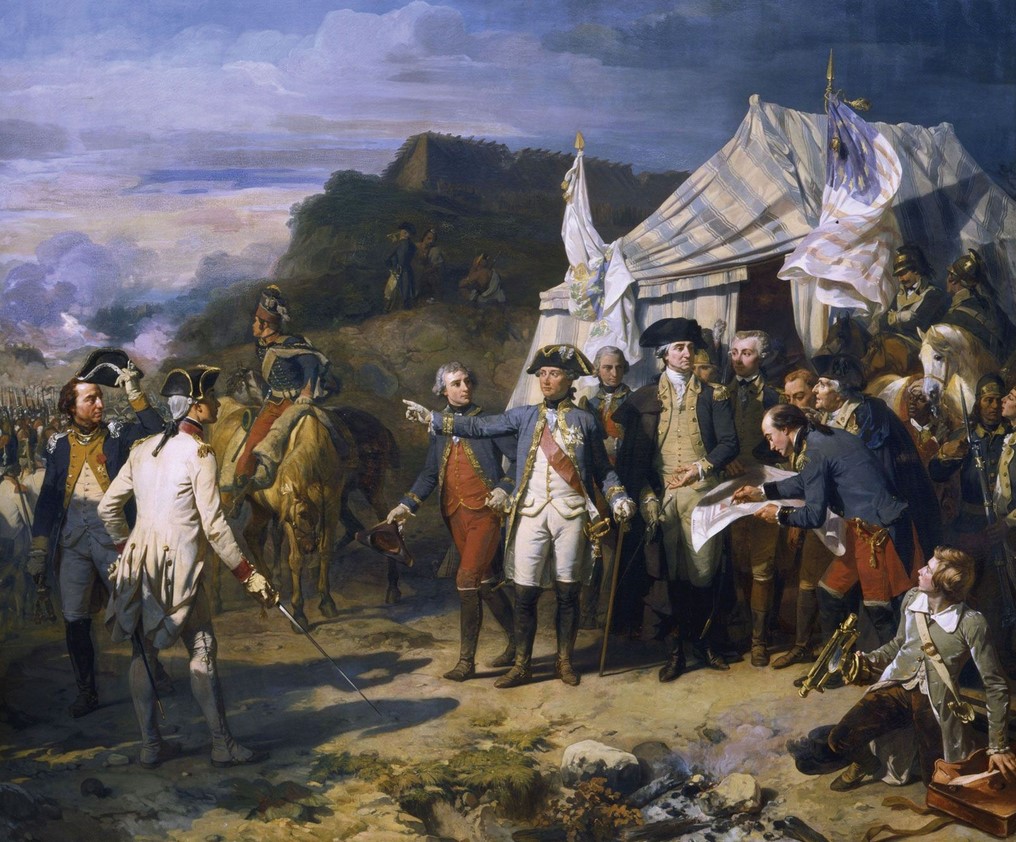 Seige of Yorktown by Louis Charles Auguste Couder, c. 1836. The painting depicts George Washington and the Comtee de Rochambeau giving orders during the siege.
The British surrender at Yorktown in October 1781 marked a pivotal moment in history. It effectively ended major combat operations in the American Revolutionary War and paved the way for the United States’ independence.
By the late 1770s, the Revolutionary War had reached a stalemate. British forces, led by General Charles Cornwallis, shifted their focus to the southern colonies, hoping to rally Loyalist support and regain control. However, American forces under General George Washington, aided by French allies, were steadily regaining ground. The French navy, commanded by Admiral de Grasse, played a crucial role in blockading British reinforcements and supplies.
In the summer of 1781, Cornwallis moved his army to Yorktown, Virginia, intending to establish a fortified base with access to the sea. What Cornwallis didn’t know was Washington and French General Rochambeau had coordinated a daring plan to march their combined armies south from New York and trap the British at Yorktown. Simultaneously, the French fleet sailed up from the Caribbean, blocking the Chesapeake Bay.
The siege began in late September 1781. American and French troops surrounded Yorktown by land, while the French navy prevented any escape or resupply by sea. Over three weeks, the allies bombarded British positions, tightened their lines, and captured key strongholds. British morale crumbled as food and ammunition dwindled.
On October 17, 1781, realizing the futility of further resistance, Cornwallis requested terms of surrender. Negotiations followed, and on October 19, the British formally capitulated. Cornwallis, claiming illness, did not attend the surrender ceremony, sending General Charles O’Hara in his place. In a symbolic moment, British troops marched out, laid down their arms, and the American and French flags flew triumphantly over Yorktown.
The surrender at Yorktown stunned Britain and shifted public opinion against continuing the war. Peace negotiations began soon after, culminating in the Treaty of Paris in 1783, which recognized the independence of the United States. For the fledgling nation, Yorktown represented not just a military victory but a validation of its quest for self-rule and liberty.
The victory at Yorktown demonstrated the effectiveness of American and French cooperation and altered global power dynamics. The British surrender at Yorktown was more than a military defeat; it was a turning point that redefined the future of the United States and influenced global history. The legacy of Yorktown endures as a testament to resilience, alliance, and the enduring pursuit of independence.