
Evacuation Day
“Strike up the band, bring out the oxen…Let’s celebrate!
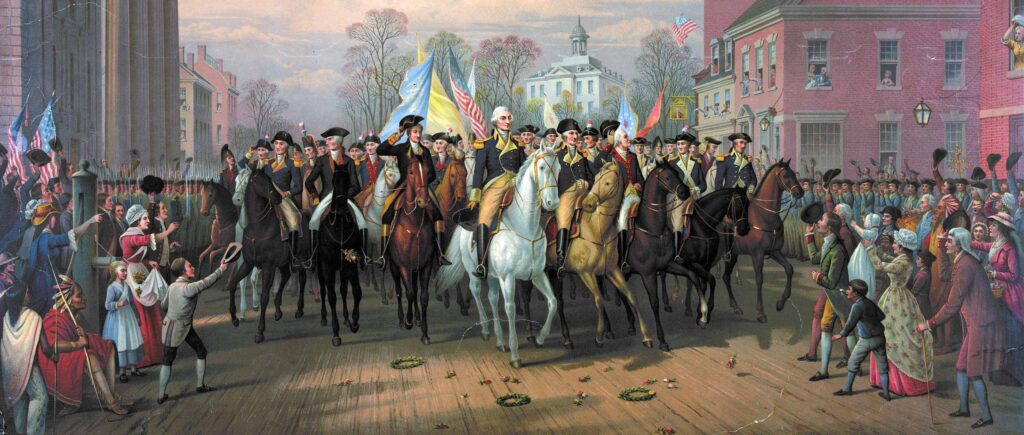
Celebrated in Massachusetts, the day commemorates the evacuation of the British forces holding Boston under siege for 11 months. The British control of the sea and land accesses had stymied the Continental Army under Washington.
Boston bookkeeper and artillery genius, Henry Knox engineered “one of the most stupendous feats of logistics of the entire Revolutionary War.” Knox organized the transfer of 60 cannons and armaments (captured at Fort Ticonderoga from the British) more than 300 miles during blizzard conditions. Determined men and oxen overcame unbelievable odds to complete the trek to Boston, where under his brilliant leadership on March 17, 1776, Knox positioned those cannons on the Dorchester Heights above Boston. The Continental Army began to rain down fire on the British army forcing them to flee in a matter of hours.
Known as the “gentle giant” for his corpulence, Knox delivered Washington his first significant Revolutionary War victory, revitalized morale and would continue to serve with Washington on almost every campaign, including the logistics of crossing the Delaware and defeating the British at Yorktown. That was the beginning of the end of the British hold on Philadelphia.
Henry Knox began his career as a bookkeeper and taught himself the use of artillery, becoming an artillery genius whose strategies are still studied today. He wrote a book about the use of artillery, which became the basic manual and is still used at West Point today. Knox became our nation’s first Secretary of War and even the Irish raise a toast to Knox on March 1 …Evacuation Day!
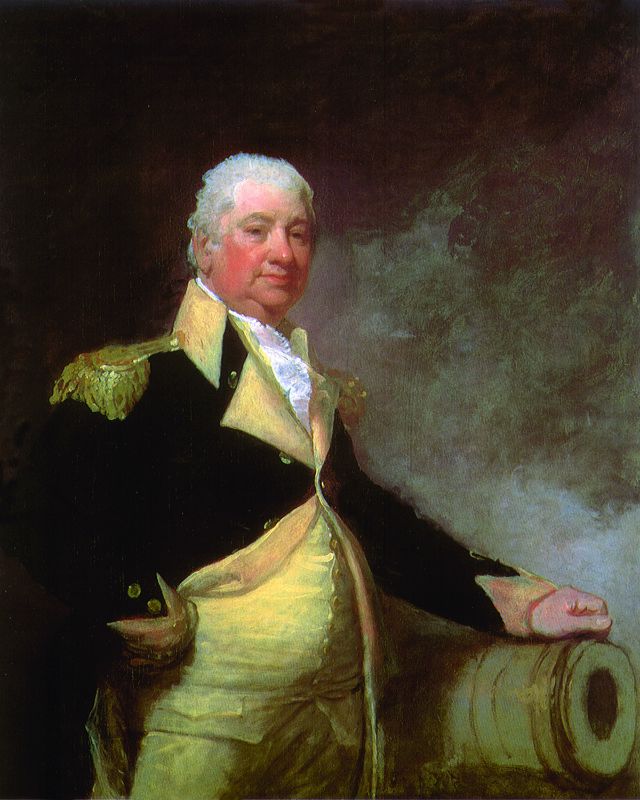 Gen. Henry Knox 1805, Stuart, Gilbert, 1805. (Photo: Picturenow/Universal Images Group via Getty Images) (Pictures Art Collection/Alamy Stock Photo)
 “Incident on King’s Street”
Taunts, snowballs, clubs and then gunfire (an accidentally discharged musket most likely) …and six men lay dead on King’s Street in Boston, March 5, 1770.
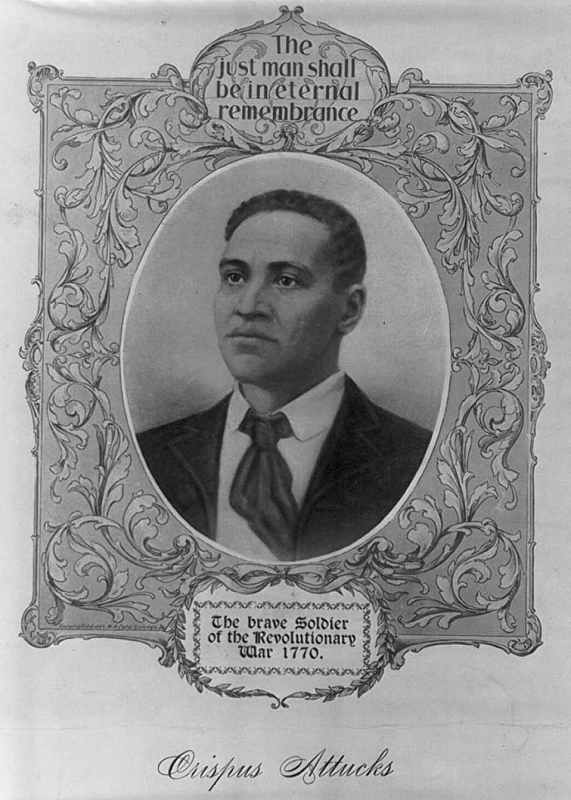
A sailor and dockworker of African and native descent fell first. Identified as Crispus Attucks, he would become known as the first American to die in the American Revolutionary War.
Tensions were growing between colonists and British soldiers and officials – taxation, new regulations on trade …made the Customs House on King Street a popular place to gather to vent that anger and protest the new laws.
On the morning of March 5, 1770, some 50 to 60 citizens had gathered in a mumbling and angry mood. They began to provoke the British sentries (“using the most opprobrious language”) …knowing that the soldiers were not allowed to fire their guns or use their swords. The mob moved closer and more menacing, throwing snowballs, rocks, whatever to hand they had …when the shot rang our and a melee ensued.
This clash, as it was reported to an enraged King George III certainly did no good service to frayed relationships with the colonies. The colonists referred to the incident as the Boston Massacre and printed the details in broadsides (a large sheet of paper printed on one side) , which they distributed throughout the 13 colonies…reported as they saw it.
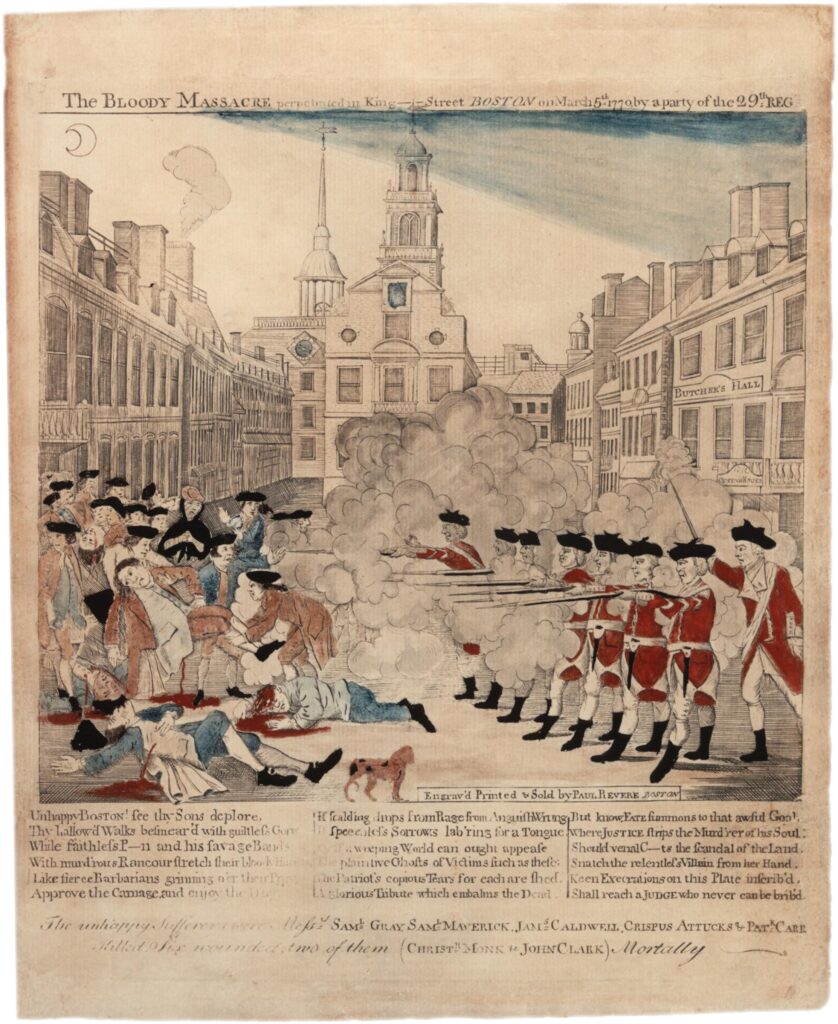
GLC 1868. Paul Revere. Print: Engraving of The Bloody Massacre perpetrated in King Street, 1770. Courtesy of The Gilder Lehrman Institute Of American History.
Ah, the power of the press!!!
Linda Turner
Vacation Liberty School of Georgetown