
When to Fly Your American Flag
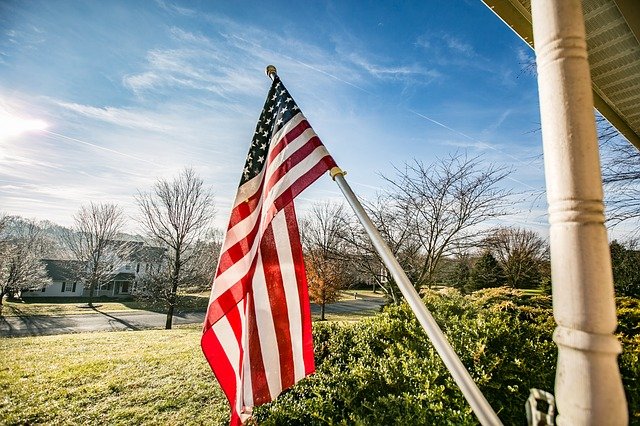
When we see the flag, we’re reminded of liberty, freedom and pride. The America flag has accompanied our nation in making its greatest achievements. It flies at both poles, on the moon and sits atop Mount Everest. The flag is how America signs her name.
New Year’s Day * January 1
Inauguration Day * January 20
Martin Luther King Jr. Day * Third Monday in January
Lincoln’s Birthday * February 12
Washington’s Birthday (Observed) * Third Monday in February
Easter Sunday * Date varies
National Vietnam War Veterans Day * March 29
Mother’s Day * 2nd Sunday in May
Peace Officers Memorial Day (half-staff) * May 15
Armed Forces Day * Third Saturday in May
Memorial Day * Last Monday in May (fly half-staff until noon, peak position until end of the day)
Flag Day * June 14
Father’s Day * 3rd Sunday in June
Independence Day * July 4
National Korean War Veterans Armistice Day * July 27
Labor Day * First Monday in September
Patriot Day * September 11
POW/MIA Recognition Day * 3rd Friday in September
Constitution and Citizenship Day * September 17
Columbus Day * Second Monday in October
Navy Day * October 27
Veterans Day * November 11
Thanksgiving Day * Fourth Thursday in November
National Pearl Harbor Remembrance Day (half-staff) * December 7
Christmas Day * December 25
During the American Revolution in 1775 fighters were not unified under a single flag. Most would fight under their own flags. The Continental Congress, along with its creation of the Continental Army, a unified colonial fighting force to organize in its battle against colonial oppressors, created the first “American” flag with Continental Colors. Some felt the current flag too closely resembled the British flag, so George Washington turned his efforts toward designing a new symbol of freedom by creating and uniting his army under a single flag.
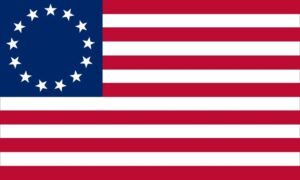
On June 14, 1777 the Second Continental Congress, while writing the Articles of Confederation, took a break and adopted the flag of the United States. It was resolved by the Flag Resolution, which decreed the “flag of the 13 United States be thirteen stripes, alternate red and white; that the union be 13 stars, white in a blue field, representing a new constellation.” It passed the Congress.
In 1916, over a hundred years ago, President Woodrow Wilson officially established June 14 as Flag Day. The National Flag Day Foundation holds an annual observance for Flag Day on the second Sunday in June. Its program includes a “ceremonial raising of the national flag, the recitation of the Pledge of Allegiance, the singing of the national anthem, a parade and other events”. Many cities and towns in the country continue to hold these celebrations to honor this treasured flag.
The Star-Spangled Banner Flag House, located in Baltimore, Md. is the birthplace of the 1813 flag, which inspired Francis Scott Key to pen his famous poem a year later, has celebrated Flag Day since 1927. In that year a museum was created in the home of flag-banner pennant maker, Mary Pickersgill, who lived on this historic property. The huge emblem flew over Ft. McHenry guarding Baltimore harbor during the British Royal Navy’s three-day attack in the Battle of Baltimore during the War of 1812. Flag Day, also known as Defenders Day, since 1814 again credits Pickersgill for her contribution.
INTERESTING FACTS ABOUT OUR FLAG:
Bernard Cigrand, small town teacher and later to become dentist in Chicago, organized the first Flag Day celebration to be held nationwide every June 14th starting 1885. In many areas, the tradition continues.
Initially, it was not known if Betsy Ross contributed to making and designing the American flag. It wasn’t until her grandson, William Canby, held a press conference in 1870, was she recognized as of her possible role.
The lyrics of “The Star-Spangled Banner”, the national anthem of America since 1931, were taken from a patriotic poem written by Francis Scott Key after witnessing the Battle of Ft. McHenry during the war of 1812.
In 1950, needing to redesign the flag, after Alaska was admitted to the union, a 17-year-old Ohio student named Bob Heft, borrowed his mother’s sewing machine, disassembled his family’s 48 star flag and stitched on 50 stars in a proportional pattern. He turned his creation into his history teacher for a class project assuming Hawaii would be the next state added. He sent his design to Congressman Walter Moeller, who presented it to President Eisenhower after both states joined the Union. Eisenhower accepted his design and on July 4, 1960 the flag was raised for the first time as the high school student stood together with the President of the United States.
Flying the flag upside down can be seen as a symbol of official distress according to the Flag Code.
Flag Code also states that the Stars and stripes should not be used as apparel, bedding or drapery.
Any burial can incorporate the draping of the American flag over the coffin. It isn’t reserved just for the military veterans and government officials.
Flags should be illuminated by sunlight or another light source when on display.
Other points of interest may be found on the History Stories website. Printed May 26,2021 with Original date being June 14, 2018.
We might add, that the lives lost, the freedoms gained under this flag gives us all the more reason to stand with pride as we salute, pledge and sing to this great American flag. Long may she wave.
Author Sandy Hayes
Revised June 20, 2026
References:
Wikipedia/Flag Day https://en.wikipedia.org/wiki/Flag_Day_(United_States)
History.com/What is Flag Day https://www.history.com/news/what-is-flag-day